Have you ever read your child’s homework and noticed missing punctuation, awkward sentences, or words that just don’t seem quite right? Many parents wonder whether these mistakes are a normal part of learning or a sign that their child may be falling behind. The reality is that grammar develops gradually, and occasional errors are expected. However, by the end of Year 6, students should have a solid understanding of the grammar skills that support clear communication and confident writing. Strong grammar is the foundation for success not only in English but across every subject that requires written responses. This practical guide outlines the key grammar concepts children should know before starting secondary school and offers simple ways parents can reinforce these skills at home.
Why Grammar Fundamentals Matter
Grammar is much more than following language rules. It helps children organise ideas clearly, communicate effectively, and produce writing that is easy for others to understand. Whether students are writing persuasive texts, science reports, history assignments, or creative stories, good grammar allows them to express their knowledge with confidence. Developing strong grammar for primary students also contributes to better performance in assessments such as NAPLAN, where written communication plays an important role.
Year 6 represents an important milestone because it prepares students for the increased writing expectations of secondary school. As assignments become longer and more analytical, grammar mistakes can distract from otherwise strong ideas. Building these skills early helps children approach more advanced writing with greater confidence.
What "On Track" Looks Like By Year 6
By the end of primary school, students are generally expected to recognise the main parts of speech, construct different sentence types, use punctuation correctly, and edit their own writing for common grammar errors. They should also understand how grammar choices improve clarity and make their writing more engaging. While every child progresses at their own pace, these expectations provide a useful benchmark for parents monitoring their child’s development.
Parts Of Speech Every Year 6 Student Should Recognise
Understanding the building blocks of language helps children write with greater accuracy and confidence. The parts of speech form the basis of almost every sentence they create.
Nouns, Pronouns, & Adjectives
Nouns identify people, places, things, or ideas. For example, teacher, school, and friendship are all nouns. Pronouns replace nouns to avoid repetition, such as he, she, they, and it. Adjectives describe nouns by adding detail, helping readers create clearer mental images. Words like colourful, careful, and exciting make writing more descriptive and engaging.
Verbs & Adverbs
Verbs describe actions or states of being. Words such as run, think, create, and is all function as verbs. Adverbs provide extra information about verbs by explaining how, when, where, or to what extent an action occurs. For example, in the sentence “She completed the task carefully,” the word carefully modifies the verb completed.
A common mistake is confusing adjectives and adverbs, particularly when children use an adjective where an adverb is required. Understanding the difference improves both grammar and sentence flow.
Conjunctions & Prepositions
Conjunctions join words, phrases, or clauses together. Common examples include and, but, because, and although. They help children build longer, more sophisticated sentences by connecting related ideas.
Prepositions describe relationships between words, particularly location, direction, or time. Words such as under, between, before, and during help explain how people, objects, and events relate to one another within a sentence.
Sentence Structure Basics: Building Clear and Correct Sentences
Knowing individual grammar rules is important, but students must also understand how to combine them into effective sentences. Well-structured writing is easier to read and communicates ideas more clearly.
Simple, Compound, & Complex Sentences
Simple sentences contain one complete idea, such as “The dog barked.” Compound sentences join two independent ideas using conjunctions, while complex sentences combine an independent clause with one or more dependent clauses.
Using a variety of sentence structures improves writing by creating better rhythm and helping students explain more complex ideas. Many grammar rules for students focus on developing this flexibility rather than relying on repetitive sentence patterns.
Avoiding Run-On Sentences & Fragments
Run-on sentences occur when multiple ideas are joined without correct punctuation or conjunctions. Sentence fragments happen when part of a sentence is missing, leaving the thought incomplete.
Encourage children to reread each sentence and ask themselves whether it expresses one complete idea. Reading work aloud often makes these problems much easier to identify.
Subject-Verb Agreement
Subjects and verbs must agree in number. For example, “The dog runs” is correct because the singular subject matches the singular verb. Similarly, “The dogs run” uses the correct plural form.
Mistakes often occur when longer sentences separate the subject from the verb. Helping children identify the true subject first makes agreement much easier to check.
Punctuation Rules Kids Often Get Wrong
Even confident writers can lose marks through incorrect punctuation. Understanding these essential grammar rules helps children produce clearer, more professional writing.
How To Give Feedback Without Discouraging Your Child
Constructive feedback should build confidence, not reduce it. Children are more willing to improve when they feel their efforts are recognised alongside areas for growth.
Commas
Many Year 6 students either overuse commas or forget them altogether. Commas separate items in a list, introduce pauses where appropriate, and help clarify sentence meaning. Children should also avoid comma splices, where commas incorrectly join two complete sentences.
Apostrophes
Apostrophes remain one of the most commonly misunderstood punctuation marks. They indicate either possession, as in “Sarah’s book”, or contractions, such as “don’t” and “it’s”. Confusing these two purposes often leads to avoidable errors.
Capitalisation & Full Stops
Although these seem like basic skills, Year 6 students still occasionally forget capital letters for proper nouns or fail to end sentences with full stops. Encouraging careful proofreading helps children identify these simple mistakes before submitting their work.
Common Grammar Mistakes & How To Fix Them
Certain grammar errors appear repeatedly in primary school writing because they involve commonly spoken words that sound alike but serve different purposes. Confusing their, there, and they’re remains one of the most frequent examples, while your and you’re continue to cause problems even for older students. Another common challenge involves choosing between was and were in different sentence structures.
Double negatives, such as “I don’t have no homework,” also create confusion by unintentionally changing sentence meaning. One of the most useful grammar rules for students is learning to pause after writing and reread each sentence carefully. Checking individual words within their sentence context often allows children to identify and correct many of these mistakes independently.
Simple Ways To Reinforce Grammar Skills At Home
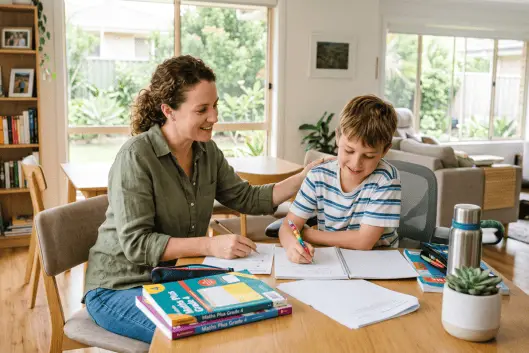
Parents do not need to become English teachers to help their children strengthen grammar skills. Reading aloud together encourages children to notice sentence structure, punctuation, and natural language patterns. Asking simple questions about why a sentence sounds clear or confusing helps develop grammatical awareness without formal lessons.
Short grammar games, quizzes, and proofreading activities also provide valuable practice in an enjoyable way. Encourage your child to review school assignments before handing them in, looking specifically for punctuation, capital letters, and common grammar mistakes. Everyday writing opportunities, including shopping lists, text messages, birthday cards, emails, or family notes, offer low pressure ways to reinforce grammar naturally while building confidence through regular use.
Final Thoughts
Grammar mastery develops over time through regular reading, writing, and consistent practice. Small corrections, positive encouragement, and everyday opportunities to use language all contribute to stronger communication skills. If your child needs additional support to build confidence in grammar and writing, GrowthEdge Learning provides personalised guidance that helps students strengthen essential language skills and prepare for future academic success.