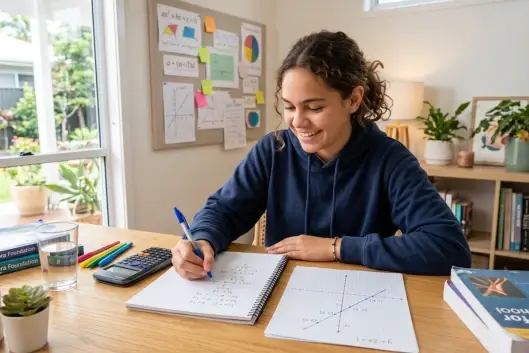
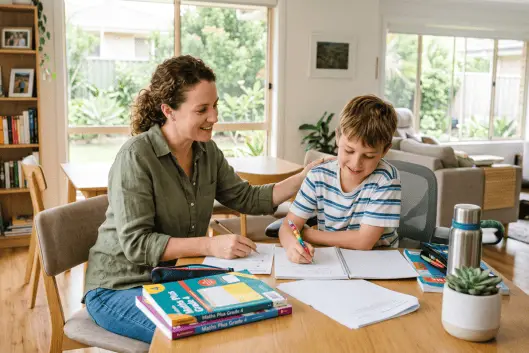
Motivation naturally rises and falls across a school year, and that is completely normal. Students may begin the year feeling energised and focused, only to experience a dip after several weeks of assignments, tests and competing responsibilities. The goal is not to stay highly motivated every day, but to develop habits that help maintain steady progress even when enthusiasm is low. Consistent effort is usually more valuable than short bursts of intense study because academic improvement develops over time. This guide explores practical study tips and motivation strategies, including setting achievable goals, creating sustainable routines, managing the mid-year slump, recognising small wins and developing resilience. Together, these approaches can help students stay engaged and finish the school year with greater confidence.
Setting Clear, Achievable Goals
A large academic goal can feel overwhelming when viewed as one long journey. Breaking it into smaller milestones makes progress easier to see and gives students regular opportunities to recognise their improvement.
Breaking The Year Into Smaller Milestones
Instead of setting one goal for the entire school year, students can establish term-by-term or monthly targets. A goal such as “do better at maths” is difficult to measure, while “improve my next maths test score by 10%” gives the student something specific to work towards.
Progress can be tracked using a simple checklist, calendar or progress chart. Seeing completed tasks and improvements provides a sense of achievement and makes long-term goals feel more manageable.
Aligning Goals With Personal Interests
Academic goals are often more meaningful when students understand why they matter. A student interested in technology may be more engaged when connecting mathematics or science skills with future interests. Similarly, someone interested in writing, communication or creative subjects may find greater motivation when they can see how current skills relate to their goals.
Students should also have a role in setting their own targets. Involving them in the process builds ownership and makes goals feel personally relevant rather than simply imposed by parents or teachers.
Building A Routine That Works For You
Motivation should not be the only thing determining whether a student studies. A practical routine reduces the need to wait until someone feels motivated and creates a predictable structure for completing important tasks. At the same time, a good routine should be flexible enough to change when school, family or personal commitments become demanding.
Creating A Consistent Daily Schedule
Fixed study times can make academic work easier to start because the decision about when to study has already been made. Students might set aside specific periods for homework, revision or reading while keeping the schedule realistic.
Study blocks should be balanced with short breaks and downtime. Trying to work continuously for several hours can reduce concentration and increase fatigue. Regular breaks can help students return to their work with greater focus.
Identifying Your Most Productive Hours
Not everyone concentrates best at the same time of day. Some students may feel most alert in the morning, while others work better later in the afternoon or evening.
Identifying these natural patterns can help students organise their workload. More demanding subjects or challenging tasks can be scheduled during periods of peak concentration, while simpler activities can be completed when energy levels are lower.
Overcoming The Mid-Year Slump
The middle of the school year can be particularly challenging. The excitement of starting a new year has often disappeared, while assessments and deadlines may begin to accumulate. Recognising this dip as a normal part of the academic cycle can make it easier to respond constructively rather than assuming a student has simply become lazy or uninterested.
Recognising The Signs Of Burnout
Fatigue, disinterest, procrastination and declining academic performance may indicate that a student needs to reassess their routine. Normal tiredness usually improves with adequate rest, while deeper burnout may involve ongoing exhaustion, frustration or a persistent loss of interest.
Students and parents should pay attention to patterns rather than one difficult week. If tiredness or emotional distress continues, it may be appropriate to discuss the situation with a teacher or relevant professional.
Reigniting Motivation
Returning to the reasons behind an original goal can help restore direction. Students can ask themselves what they wanted to achieve at the beginning of the year and why that goal mattered.
Changing the learning approach can also make study feel less repetitive. Students might alternate between practice questions, flashcards, summaries, teaching a concept aloud or working in a different suitable environment.
Short, intentional breaks can provide recovery without bringing the study routine to a complete stop. The aim is to pause, recharge and return to the task rather than abandoning it altogether.
Celebrating Small Wins Along The Way
Long-term motivation becomes easier to maintain when students can see evidence that their efforts are producing results. Small improvements may not seem significant individually, but they can build confidence when recognised consistently.
Using Progress Markers
Students can record improvements in a journal, checklist, calendar or simple chart. Progress might include completing a difficult assignment independently, improving a test result, mastering a new concept or maintaining a study routine for several weeks.
Recognising improvement rather than focusing only on final results helps students understand that progress is made through many smaller steps.
Rewarding Effort, Not Just Outcomes
Simple rewards can acknowledge consistency and hard work. These might include time for a favourite activity, a break after completing a study goal or choosing something enjoyable to do after finishing an important task.
However, external rewards should not become the only reason for studying. Over time, students need to develop internal motivation by experiencing the satisfaction that comes from understanding something difficult, becoming more capable and reaching personally meaningful goals.
Small wins can gradually strengthen confidence. When students see that consistent effort produces improvement, they are more likely to continue working through challenging periods.
Staying Resilient Through Setbacks
Every school year includes disappointing results, difficult topics and weeks when things do not go according to plan. Resilience does not mean avoiding these setbacks. It means learning how to respond to them without allowing one difficult experience to determine future effort.
Reframing Failure As Feedback
A poor grade can provide useful information about what needs more attention. Instead of thinking, “I am bad at this subject,” students can ask, “Which areas do I need to improve?”
This shift encourages problem-solving rather than self-criticism. Students can review mistakes, identify patterns and decide what action to take next. A difficult assessment becomes feedback that can inform future study.
Building A Support System
Parents, teachers, tutors and peers can all provide valuable encouragement during challenging periods. Talking openly about struggles allows students to seek assistance before difficulties become overwhelming.
Developing simple recovery habits can also help students bounce back more quickly. Reviewing what went wrong, making a realistic adjustment and taking the next manageable step can prevent one setback from becoming a prolonged loss of motivation.
Key Takeaways
Motivation is built through clear goals, sustainable routines, small wins and resilience rather than willpower alone. Dips in motivation are a normal part of a long school year and can be managed by adjusting routines, reconnecting with goals and seeking support when needed. Effective student motivation strategies focus on steady progress rather than perfection, helping students remain engaged even when enthusiasm naturally fluctuates.